Sea
Solutions
for a better World!
Home
Main services are:
- Metocean Site characterizations
- Metocean data gathering
- Metocean Studies
- Wave and hydrodynamic modeling
- Analysis of coastal processes
- Sediment transport and morphology assessment
- Assessment of LNG cooling water discharge / contaminant dispersion
- Oil spill assessment
- Software development
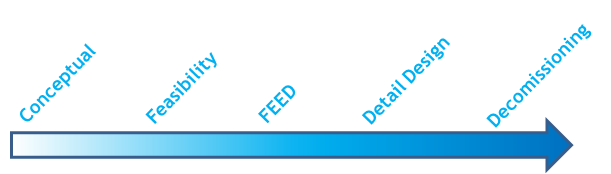
State of the art analysis and methods are continuously improved to support Clients throughout all phases of marine projects from feasibility to design, construction and decommissioning.
Metocean analyses are performed meeting typical needs of different Clients: Oil Majors, Engineering Companies, Legal Firms, Insurances&Underwriters, Ship-owners, Brokers, Consultancy Companies, Classification Societies, Research Institutes.
DEDICATED SUPPORT TO CLIENT’s NEEDS
Metocean services are spread on different tasks depending on Client’s needs and according to the required project phase. High quality data and specifically tailored analysis are managed to satisfy and support our Clients on a joint approach.
Outstanding cooperation with different high specialized consultancy companies allows a correct and complete identification of the different problem issues contributing to a final high quality work and a recognized Client satisfaction.
Offshore & Coastal Metocean Studies
Metocean conditions (wind, waves, sea levels, currents, etc.) are certainly among the most significant parameters to achieve a technically feasible and cost-effective coastal and/or offshore project design. Assessment at worldwide locations of metocean conditions is provided using fit-for-purpose approaches and tools.
Qualified metocean hindcast databases and satellite observations are used to directly assess metocean climate or to force detailed local models.
Specific statistical analyses are performed to define typical (i.e. annual/seasonal regime, downtime, weather stand-by windows, etc.) and extreme (i.e. extreme storms characteristics, maximum wind and waves, tropical cyclones, tsunami, etc.) conditions affecting the project site.
Marine Metocean
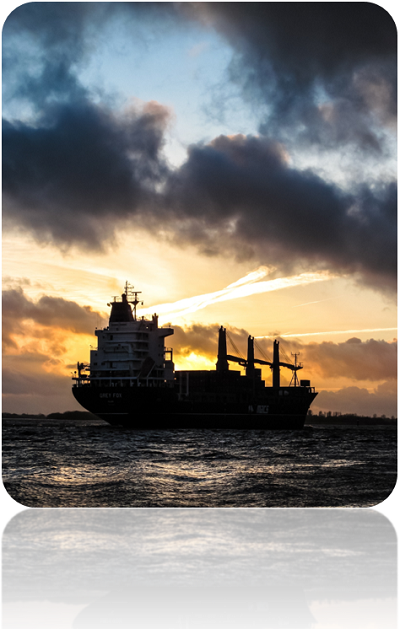
Support in the definitions of marine systems/operations is provided. One of the key aspects in marine engineering design is the assessment of the most critical metocean conditions.
Depending on the marine system/operation to be design or analysed (i.e. mooring systems, ship-to-ship transfer, ship motion response, sea transport, maneuvering analysis and simulation, etc.) the critical conditions not always correspond to extreme conditions resulting from an EVA (Exteme Values Analysis).
In this context, a correct representation of metocean conditions is essential to identify critical aspects affecting the final design reliability.
Morphology and Scour Assessment
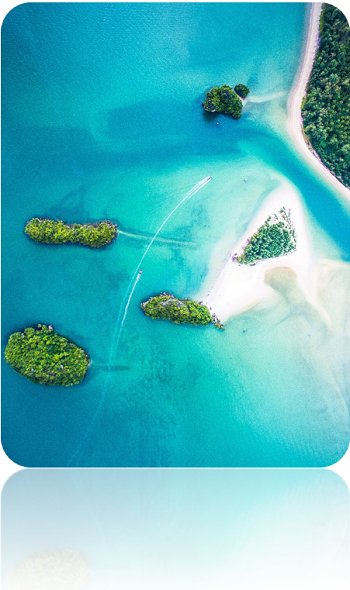
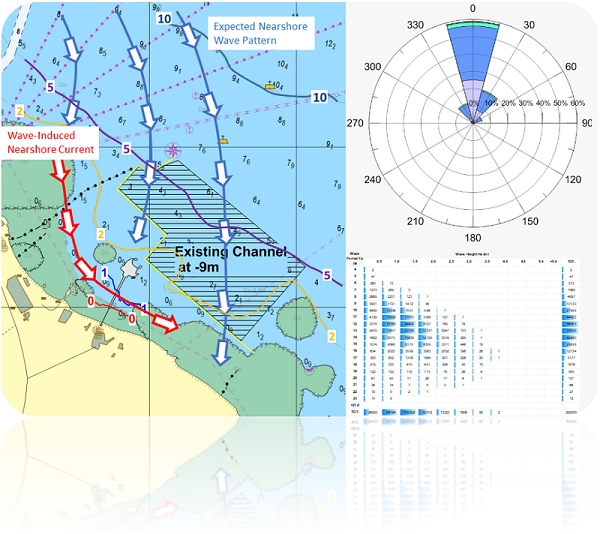
Hydrodynamic processes interact with the sea bottom to mobilise and transport sediments. Numerical models are used to simulate sediment transport and morphology processes generated by the interaction between hydrodynamics with bathymetry features and coastal/subsea structures.
Engineering analysis tools and numerical modelling are combined to characterize morphology processes affecting the projects at all stages including feasibility, planning, permitting and design. Assessment of morphology and scour dynamics allows evaluating performances of different project design alternatives and supporting environmental impact studies.
Applications of sediment transport modelling include design of shoreline protection, impact assessment of coastal structures, estimation of channel/trench backfilling, seabed mobility, sand waves and pipeline/cable burial criteria, local scour assessment and protections design, cover requirements for pipeline/cable landfalls and pipeline/cable free span evolution.
Metocean Services are customized on Clients needs applying state-of-the-art models and by means of a deep understanding of the involved physical processes. Attitude to research and development of new tools results essential to properly support design of coastal/offshore facilities and planning of safe and efficient marine operations.
Main provided activities are listed here below:
Site Characterization
Analysis of wind, wave, water level and current data on a local or regional scale are provided to support the Clients on selecting the best site for their projects/operations.
Both extreme and operational (i.e. downtime) conditions are investigated in order to select the best location and to assess whether the project is feasible.
Metocean data are gathered from qualified databases and statistically analysed.
Continuous support to the Client is provided by means of recommendations for study refinements and/or measurements to be planned during the next project phases.
Data Collection
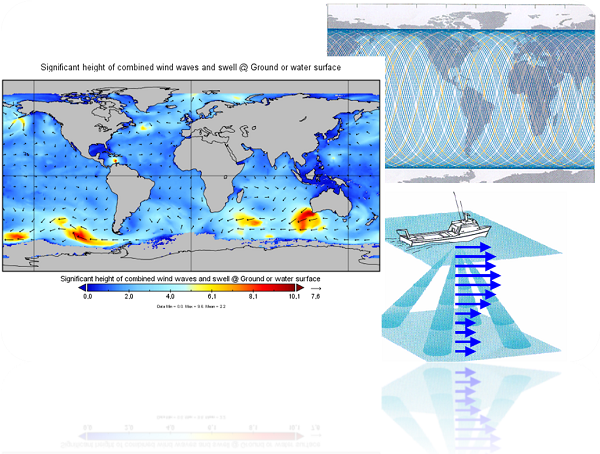
- Data from Global Metocean Hindcast Databases
- Satellite Data
- Survey specifications
- Client's survey data validation
Wave Modeling
- Spectral Wave Models, i.e. SWAN
- Boussinesq Models, i.e. FUNWAVE
- Harbour Wave Agitation Model, i.e. SWASH, ARTEMIS
- Infragravity Waves
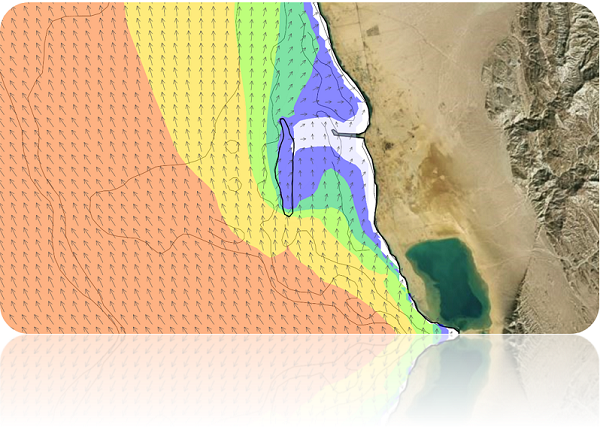
Hydrodynamic Modeling
- 2D/3D Hydrodynamic models, i.e. DELFT3D, Shorecirc
- Lagrangian models
- Morphodynamic Models
- Water Quality-Dispersion Models
- Oil Spill
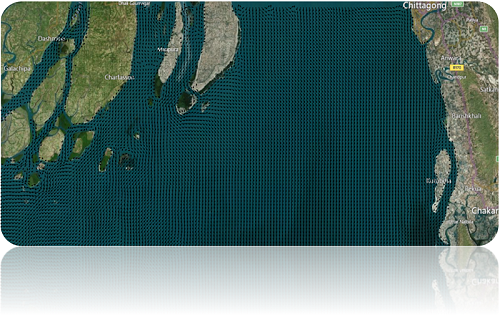
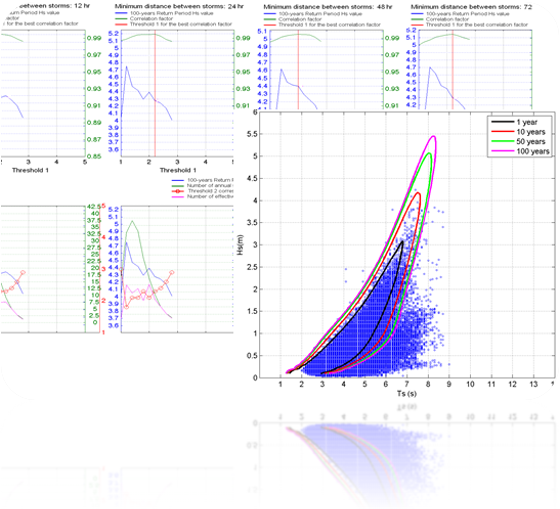
Statistical Analyses
- Extreme Values Analysis (EVA)
- Peak Over Threshold (POT)
- Joint Probabilities
- Assessment of Wind, Wave and Current Persistances
- Single Wave Distribution
- Spot Location Reports, SLR
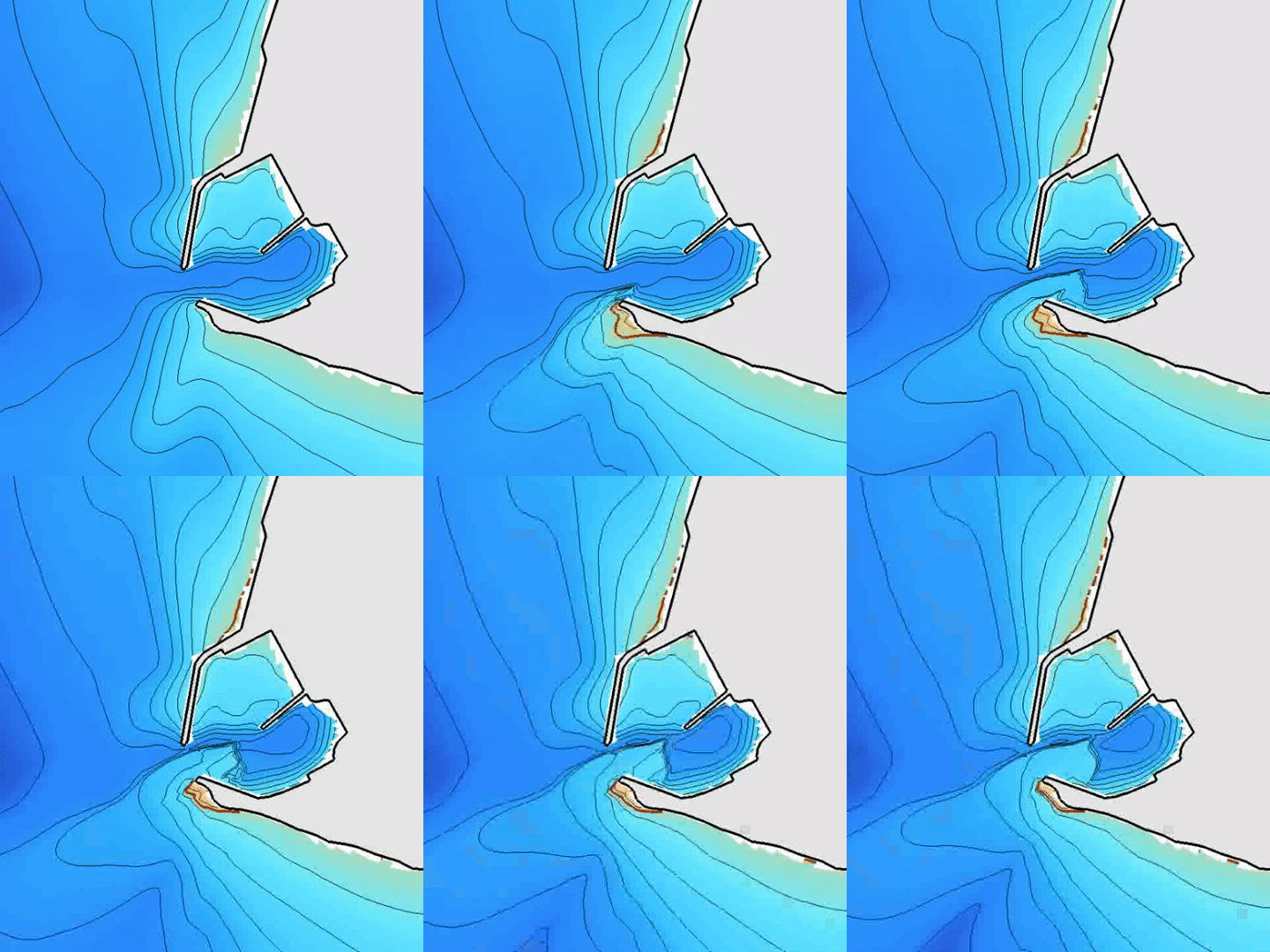
Sea Bed Evolution
- Mophodynamic Study
- Shoreline Evolution on Short, Medium and Long Term
- Impact Assessment of Coastal Structures
- Sand Waves and Pipeline/Cable Burial Criteria
- Local Scour Assessment and Protections Design
- Cover Requirements for Pipeline/Cable Landfalls
- Pipeline/Cable Free Span Evolution
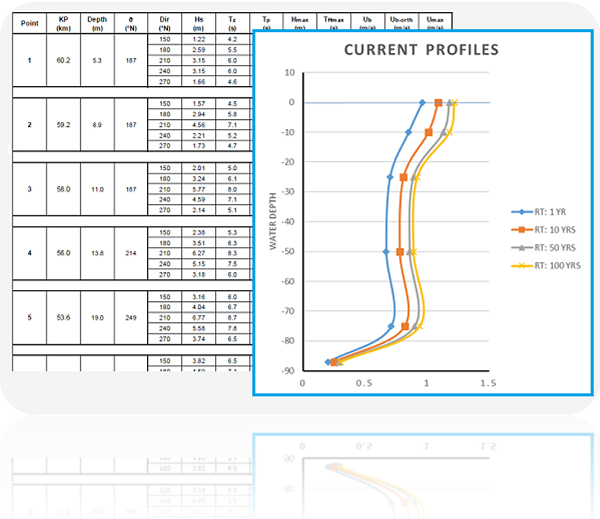
Metocean Design Criteria
- Extreme Values Assessment
- Orbital Wave Velocity and Accelerations
- Selection of Critical Metocean Conditions
- IFORM Contours and Joint Probability Analyses
- Route Criteria for Sea Transport
- Assessment of Wind and Wave Spectra
Marine Operations
Client support through ad-hoc definition and implementation of reliable critical metocean conditions for:
- Mooring System Designs
- Ship Motion Analyses
- Ship-to-ship Transfer Designs
- Logistic Studies
- Assessment of Hydrodynamic Field for Maneuvering Simulations

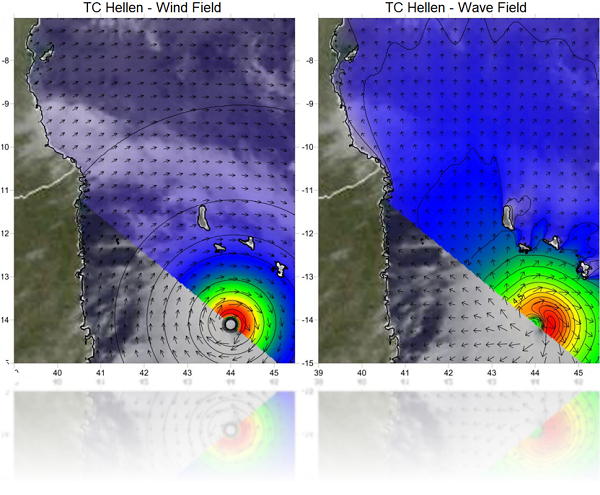
Tropical Cyclones
- Assessment of Tropical Cyclone design conditions
- Collection of Historical Cyclone Database
- Development of specific statistically valid Synthetic Tropical Cyclone database (Terrile & Guida, 2016) needed in area where the historical cyclone database is characterized by few data.
Mass Flow Modeling
- Turbidity Current Modeling
- Cohesive and Granular Mass Flow Numerical Modeling
- Implementation of Different Rheology
- Debris Flow Impact Assessment
.gif)
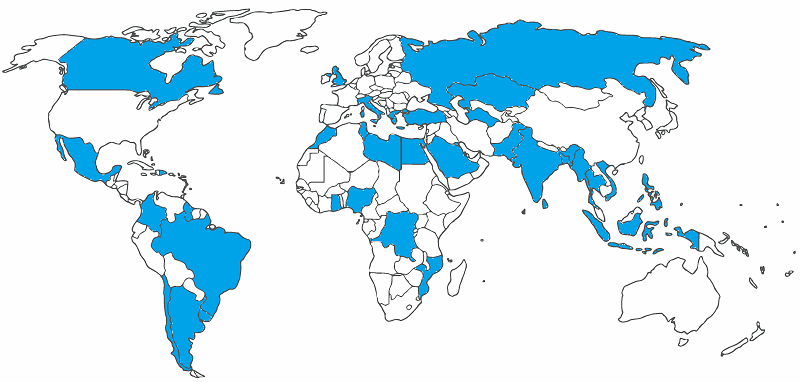
Argentina, Bangladesh, Brazil, Canada, Chile, Colombia, Congo, Egypt, Ghana, Great Britain, Greece, India, Indonesia, Italy, Kazakhstan, Kuwait, Libya, Mexico, Morocco, Mozambique, Myanmar, Nigeria, Pakistan, Philippine, Russia, Santo Domingo, Saudi Arabia, Singapore, Thailand, Tunisia, Turkey, Uruguay, and Vietnam.
I saw my way.
Water world intrigued me and even today, I find very exciting to be involved in challenging problems related with human-nature interactions.
Few years later, during the University period, I found and I won an Erasmus fellowship to TU Delft. There, I prepared my Master thesis in the Laboratory of Fluid Mechanics supervised by Prof. M.J.F. Stive and Prof. M. Brocchini: "The threshold of motion of coarse sediment particles by regular non-breaking waves".
In 2008, I got a PhD in Fluid Dynamics at DICAT, University of Genoa, discussing a Thesis on "Vorticity dynamics in the nearshore flows".
During my PhD training I investigated the nearshore circulation and related mixing using both theoretical and numerical tools. Emphasis was given to the vorticity transport and macrovortex dynamics. Part of these studies were performed at CACR (Center for Applied Coastal Research), University of Delaware, in collaboration with Prof. J.T. Kirby and Dr. R. Briganti.
Here I met my future wonderful wife.
As Marie Curie Fellow, in 2006, I worked at the Bjerknes Center for Climate Research (Norwegian Center of Excellence at the University of Bergen) with Dr. K. Drinkwater on the Norwegian Coastal Current (NCC) dynamics.
In 2007, I began a fruitful collaboration with Prof. K.H. Christensen (University of Oslo and Norwegian Met Office) on both Lagrangian-like analyses for nearshore models and oil slick dynamics forced by deep water waves.
In 2008, I held a David Crighton Fellowship at DAMTP, Department of Applied Mathematics and Theoretical Physics, University of Cambridge (UK), working with Prof. M.E. McIntyre on Lagrangian model (GLM) applied in coastal region.
In 2008 I did another step, I switched to the consulting world. I started working with a small high specialized company: DEAM s.r.l., based in Pisa (Italy). I was appointed as specialist engineer in sediment transport modeling and wave-induced shallow water circulation, contributing to several coastal engineering projects.
Four years later, I moved to Genoa joining Rina Group in the Oceanography and Marine Modeling Units, Oil & Gas Division. I took part to several exciting projects as both specialist engineer and project manager.
In Genoa I became a dad with three beautiful, lively and lovely kids!
It was in 2017 when I was appointed as Metocean Manager in Rina Consulting. I have been involved within many multidisciplinary projects with respect to the definition of metocean design parameters for the offshore engineering, development of debris flow modeling activities, nearshore circulation modeling studies, morphodynamics studies for coastal protection, sediment transport studies for pipeline design, preparation of technical documentation for tenders and revision of EU projects.
In 2019 the last, but not the least, step.
Interest and passion for offshore and coastal environments are still alive and move me on finding new challenges. As independent consultant, I am involved in new projects requiring expertise on metocean and sediment transport issues providing Client tailored Sea Solutions. I still have a long way to go and I can keep running longer...
Education
- PhD in Fluid Dynamics, University of Genoa, Italy, 2008
- University Degree, Civil Engineering, University of Genoa, Italy, 2004
Awards
- David Crighton Fellowship, DAMTP, University of Cambridge, UK, 2008
- Marie Curie Fellowship, Bjerknes Center for Climate Research, Norwegian Center of Excellence at University of Bergen, Norway, 2006
- Best Curriculum of Study, University of Genoa, 2003 and 2004
Affiliations
- Professional Engineer Registration "Ordine degli Ingegneri di Genova"
Sports & Hobbies
- Football
- Skiing
- Painting
- Diving